

Inside the Hacienda: Exploring Manchester’s Iconic FAC51 Rave Scene of the 90's

Step back in time to the pulsating heart of Manchester’s legendary music culture with an inside look at FAC51 The Hacienda, the iconic nightclub that defined the city’s rave scene in the 1990s. More than just a venue, The Hacienda was a cultural phenomenon where ground breaking electronic beats, cutting-edge fashion, and a vibrant community converged to create an unforgettable nightlife experience. From its influential DJs and unforgettable nights to its role in shaping the UK’s music landscape, this blog post delves deep into the spirit of FAC51, exploring how it became a symbol of creativity, rebellion, and unity during one of the most exciting eras in dance music history. Join us as we unravel the stories, sounds, and legacy of Manchester’s beloved rave haven.
1. Introduction to The Hacienda and its cultural significance
The Hacienda was more than just a nightclub—it was the beating heart of Manchester’s vibrant music and cultural scene during the late 1980s and early 1990s. Opened in 1982 by the record label Factory Records and the iconic band New Order, The Hacienda quickly became a revolutionary space where music, art, and youth culture converged. It wasn’t simply about the parties; it was a movement that helped define an era, giving rise to the legendary “Madchester” sound that blended acid house, indie rock, and dance music in ways never heard before. The club became a melting pot for creativity and expression, attracting a diverse crowd of music lovers, artists, and trendsetters who shaped not only Manchester’s nightlife but also the global rave culture. Its influence extended far beyond its walls, inspiring countless musicians and clubbers worldwide and cementing The Hacienda’s place as an iconic symbol of 90s British club culture.
2. The origins of FAC51 and its connection to Manchester’s music scene
FAC51, famously known as The Haçienda, was more than just a nightclub—it was the beating heart of Manchester’s vibrant music scene in the late 1980s and 90s. Founded in 1982 by the record label Factory Records and the band New Order, The Haçienda was envisioned as a creative hub where music, art, and youth culture could collide. Its name, FAC51, was the label’s catalogue number for the club, symbolizing its integral role within the Factory family.
Manchester was already a hotbed for musical innovation, with post-punk and new wave acts paving the way. The Haçienda took this energy to the next level by championing emerging genres like acid house and rave music, which were sweeping across the UK at the time. It became the epicentre for DJs and musicians who pushed boundaries, hosting legendary performances from the likes of The Stone Roses, Happy Mondays, and electronic pioneers such as A Guy Called Gerald.
The club’s industrial, raw aesthetic mirrored the city’s working-class roots, creating an atmosphere that was both gritty and exhilarating. More than a venue, FAC51 was a cultural movement that helped define Manchester’s identity and placed it firmly on the global music map. Its influence extended far beyond its walls, sparking a rave revolution that shaped the sound and spirit of a generation.
3. Key figures behind The Hacienda’s rise
The Hacienda’s meteoric rise in the late 1980s and early 1990s wouldn’t have been possible without the vision and passion of several key figures who helped shape its legendary status. At the heart of this movement was Tony Wilson, the charismatic co-founder of Factory Records and a driving force behind The Hacienda. Wilson’s commitment to nurturing Manchester’s burgeoning music scene provided the perfect platform for new sounds and emerging talent. Alongside him was Rob Gretton, the band manager turned club impresario, whose business acumen helped turn The Hacienda into both a cultural hotspot and a viable enterprise.
Another pivotal figure was DJ Mike Pickering, whose eclectic sets and keen ear for ground-breaking music helped define the club’s unique sound. Pickering’s ability to blend genres—from acid house and techno to indie and funk—created an inclusive atmosphere that attracted diverse crowds night after night. Additionally, legendary DJs like Graeme Park and Dave Haslam played crucial roles in keeping the dancefloors alive with their innovative mixes and infectious energy.
Together, these individuals cultivated an environment where creativity thrived, pushing musical boundaries and fostering a sense of community that would come to define The Hacienda’s legacy. Their combined efforts not only propelled Manchester onto the global rave map but also left an indelible mark on club culture worldwide.
4. The rise of the rave culture in Manchester during the 90s
The 1990s marked a transformative period for Manchester, as the city emerged as the epicentre of a vibrant and revolutionary rave culture. Rooted in the spirit of rebellion and unity, rave culture thrived in underground clubs, warehouses, and, most famously, at FAC51 The Hacienda. This era was characterized by pulsating electronic beats, genre-defining music styles like acid house, techno, and breakbeat, and a diverse crowd united by a shared love for dance and freedom. The Hacienda became more than just a nightclub—it was a cultural movement that challenged social norms, brought together people from different backgrounds, and fostered a sense of community through music. As the rave scene grew, so did its influence on fashion, art, and attitudes, shaping Manchester’s identity and leaving a lasting legacy that continues to inspire generations today.
5. Iconic DJs and artists who defined The Hacienda sound
The Hacienda was more than just a nightclub; it was a cultural phenomenon that shaped the soundscape of Manchester and the wider UK rave scene throughout the late 1980s and 1990s. Central to its legacy were the iconic DJs and artists whose innovative styles and eclectic sets defined what came to be known as the “Hacienda sound.”
Among the most influential figures was Graeme Park, whose seamless mixing and infectious energy helped popularize the house music movement in the UK. Alongside him, Mike Pickering—a founding member of the band M People—brought a distinctive blend of soul, disco, and acid house, crafting nights that felt both cutting-edge and inclusive. Their legendary back-to-back sets became the soundtrack to countless unforgettable nights.
Another key contributor was Paul Oakenfold, whose residency at The Hacienda introduced a younger generation to trance and progressive sounds, pushing boundaries and expanding the club’s musical horizons. Meanwhile, 808 State, a Manchester-based electronic group, embodied the city’s innovative spirit with their fusion of techno and acid house, often performing live sets that electrified the crowd.
Beyond individual DJs, The Hacienda was a hub for emerging talent and collaborations. Figures like DJ Sasha and Colin Curtis also left their mark, each bringing unique influences that enriched the club’s diverse musical palette. Together, these artists didn’t just play records—they created a communal experience that redefined nightlife, music production, and youth culture in Manchester.
Their pioneering sounds continue to resonate today, influencing generations of musicians and reminding us why The Hacienda remains an iconic symbol of rave culture and musical innovation.
6. The atmosphere and vibe inside The Hacienda
Stepping inside The Hacienda was like entering another world—a pulsating, electrifying sanctuary where music, youth, and culture collided in perfect harmony. The atmosphere was charged with an infectious energy that could be felt from the moment you crossed the threshold. Dim, colourful lights danced across the exposed brick walls, while the booming basslines reverberated through the very floorboards beneath your feet. The crowd was a diverse tapestry of ravers, clubbers, and music lovers, all united by their shared passion for the emerging sounds of acid house, techno, and rave culture.
The vibe inside The Hacienda was raw, rebellious, and utterly liberating. It was a place where social barriers melted away, and creativity thrived—where fashion, art, and music fused to create an immersive sensory experience. The DJs, often pioneers of their craft, curated seamless sets that kept the dancefloor alive until the early hours of the morning. In every corner, you could feel the heartbeat of Manchester’s youth culture: vibrant, unapologetic, and pioneering a movement that would influence global music scenes for decades to come. Being inside The Hacienda wasn’t just about the music; it was about belonging to something bigger—a cultural revolution that defined a generation.
7. Memorable events and legendary parties at FAC51
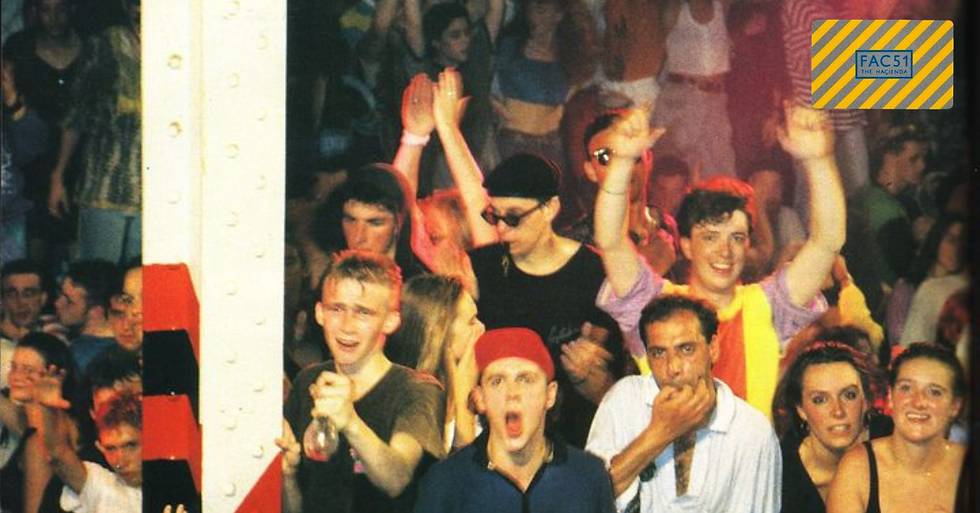
FAC51, better known as The Hacienda, was the beating heart of Manchester’s rave scene in the 90s, and its legendary parties are still talked about today. From intimate nights featuring up-and-coming local DJs to massive all-night raves that drew crowds from across the UK and beyond, the club was a hotspot for music lovers eager to experience the cutting edge of electronic music. One of the most memorable events was the legendary "Nude Night" series, where the music was as raw and uninhibited as the dancefloor itself, embodying the spirit of freedom and rebellion that defined the era. The Hacienda also hosted iconic live performances by bands like New Order, whose deep connection to the club helped shape its unique atmosphere. These events weren’t just parties—they were cultural moments that united a community, broke down social barriers, and ignited the passion for rave culture that still influences Manchester’s music scene today. Whether you were there in the 90s or have only heard the stories, the legacy of FAC51’s unforgettable nights continues to resonate.
8. The impact of The Hacienda on electronic music globally
The Hacienda was more than just a nightclub—it was a cultural phenomenon that reshaped the landscape of electronic music on a global scale. Emerging from the heart of Manchester in the 1980s and reaching its peak throughout the 90s, The Hacienda became a crucible for innovation, creativity, and community within the rave scene. Its pioneering spirit helped propel electronic genres such as acid house, techno, and rave from underground movements into mainstream consciousness.
International DJs and producers flocked to The Hacienda, drawn by its cutting-edge sound system and electric atmosphere. The club became a breeding ground for new musical styles and mixing techniques, many of which would go on to influence electronic music scenes worldwide—from Ibiza to Berlin, and beyond. Moreover, The Hacienda’s emphasis on inclusivity and its DIY ethos inspired countless other venues and artists to embrace the rave culture’s unifying power.
Perhaps most importantly, The Hacienda helped to define the very essence of what it meant to be part of the electronic music revolution. Its legacy lives on today, evident in music festivals, club nights, and electronic music production across the globe, all of which owe a debt to the vibrant energy and ground-breaking innovation that The Hacienda first unleashed.
9. How The Hacienda influenced Manchester’s youth and subcultures
The Hacienda wasn’t just a nightclub; it was a cultural epicentre that profoundly shaped the identity of Manchester’s youth throughout the late 1980s and 1990s. At a time when the city was grappling with economic challenges and social unrest, The Hacienda offered a vibrant sanctuary where young people could express themselves freely through music, fashion, and dance. It became the heartbeat of the burgeoning rave scene, introducing Manchester’s youth to acid house, techno, and the early strains of Britpop, genres that would go on to define a generation.
More than just a venue, The Hacienda fostered a sense of community and rebellion. It brought together diverse subcultures—from punks and goths to the emerging rave crowd—united by a shared love of music and a desire to break away from mainstream norms. This melting pot of influences gave rise to distinctive styles and attitudes that resonated throughout the city and beyond. The club's innovative approach to music programming and its support for local bands and DJs helped to launch careers and set trends that rippled through youth culture across the UK.
Moreover, The Hacienda’s legacy is visible in the way it challenged social barriers, encouraging inclusivity and creativity at a time when such spaces were rare. It became a symbol of Manchester’s resilience and artistic spirit, inspiring not just a nightlife revolution but also a broader cultural movement that celebrated individuality and freedom. For many, The Hacienda wasn’t just a place to party—it was where identities were formed, friendships were forged, and the foundations of modern music and youth culture were laid.
10. Challenges and controversies faced by The Hacienda
Hacienda was more than just a nightclub; it was a cultural phenomenon that helped define Manchester's music scene in the late 1980s and early 1990s. However, its journey was not without significant challenges and controversies that shaped its legacy.
One of the most pressing issues The Hacienda faced was the struggle with drug use, particularly the rise of ecstasy and rave culture. While the club became synonymous with the euphoric energy of the acid house scene, it also attracted police scrutiny and media criticism. Reports of drug-related incidents outside and inside the venue led to increased pressure from local authorities, resulting in tighter restrictions and licensing challenges.
Security at The Hacienda was another point of contention. The club’s open, free-spirited atmosphere sometimes clashed with the need to maintain order. Incidents of violence and overcrowding raised safety concerns, prompting debates about how to balance the club’s vibrant energy with the responsibility of protecting its patrons.
Financial difficulties also plagued The Hacienda throughout its existence. Despite its immense cultural impact, the club struggled to turn a profit, partly due to its unconventional business model and the costs associated with maintaining such a large venue. These economic pressures eventually contributed to its closure in 1997.
Lastly, The Hacienda’s association with the burgeoning rave scene sparked controversy among some segments of society. The club was often portrayed in the media as a hotbed of rebellion and hedonism, which led to a moral panic around youth culture at the time. This polarized public opinion but also solidified The Hacienda’s place as a symbol of youthful defiance and creative freedom.
Despite these challenges and controversies, The Hacienda’s influence on music, culture, and the city of Manchester remains undeniable. Its legacy lives on as a testament to the power of music to inspire, unite, and sometimes provoke change.
11. The decline and eventual closure of FAC51
By the mid-1990s, the vibrant energy that had once pulsed through FAC51 began to wane. Several factors contributed to the decline of this iconic venue. Increasing noise complaints from local residents, rising operational costs, and changing music trends all played a role in dampening the Hacienda’s legendary status. Additionally, the club struggled to recover from financial difficulties, partly due to the challenges of balancing underground authenticity with mainstream success.
Despite efforts to revive its former glory, FAC51 could not escape the shifting cultural landscape. The rise of new clubs and the mainstreaming of rave culture meant that the Hacienda’s pioneering spirit was no longer unique. In 1997, after nearly a decade of shaping Manchester’s music scene and influencing club culture worldwide, the doors of FAC51 finally closed.
Though the physical space no longer exists, the legacy of the Hacienda lives on through the countless artists, DJs, and fans who experienced its magic. Its impact on music, fashion, and youth culture continues to be celebrated, reminding us of a time when Manchester was truly the heartbeat of the rave revolution.
12. The legacy of The Hacienda in today’s music and club scenes
The legacy of The Hacienda in today’s music and club scenes is nothing short of monumental. As one of the pioneering venues that shaped the rave culture and electronic music explosion of the late 1980s and early 1990s, The Hacienda’s influence continues to resonate across clubs and festivals worldwide. Its ground-breaking commitment to showcasing emerging genres like acid house, techno, and Madchester sound laid the foundation for modern electronic music scenes.
Today, many contemporary clubs and events draw direct inspiration from The Hacienda’s ethos—embracing inclusivity, innovation, and a sense of community. The spirit of experimentation that The Hacienda championed can be seen in how DJs and producers blend genres, creating fresh sounds that keep dance floors alive. Moreover, the club’s focus on underground music and supporting local talent has set a precedent for nurturing emerging artists, a practice that remains central to the vibrancy of today’s music scenes.
Beyond the music, The Hacienda’s role as a cultural hub fostered a unique social atmosphere where music, art, and fashion intersected—a blueprint that modern venues strive to replicate. Tribute nights, documentaries, and exhibitions continue to celebrate The Hacienda’s heritage, ensuring that new generations understand and appreciate its role as a catalyst for musical and cultural revolution. In essence, The Hacienda’s legacy lives on not just as a nostalgic memory of Manchester’s golden era but as a dynamic, ongoing influence shaping the pulse of global club culture today.
13. Personal stories and anecdotes from ravers and staff
One of the most captivating aspects of FAC51, better known as The Hacienda, lies in the personal stories and anecdotes shared by those who lived through its legendary rave scene. For many ravers, The Hacienda was more than just a nightclub—it was a sanctuary where music, freedom, and community converged. Sarah, a lifelong Mancunian, recalls her first night at The Hacienda in 1991: “I remember stepping inside and feeling like I’d entered another world. The music pulsed through every inch of the room, and you could see pure joy on everyone’s faces. It wasn’t just about dancing—it was about belonging.”
Staff members also provide a unique window into the club’s vibrant atmosphere. Dave, who worked as a bartender throughout the mid-90s, reminisces about the eclectic crowd and the palpable energy that filled the air: “We’d have everyone from local students to famous DJs and musicians mixing in one room. Sometimes the queues would stretch around the block, but inside, it was like one big family. You could tell something special was happening.”
These first hand accounts reveal not only the cultural significance of The Hacienda but also the lasting impact it had on those who experienced it. The club wasn’t just a physical space—it was a movement, a pivotal chapter in Manchester’s musical history that continues to inspire new generations. Through laughter, late-night adventures, and shared moments on the dancefloor, the stories from ravers and staff bring the spirit of FAC51 vividly to life.
14. Preservation efforts and tributes to The Hacienda
The legacy of The Hacienda lives on not only in the memories of those who experienced its legendary nights but also through dedicated preservation efforts and heartfelt tributes that celebrate its profound impact on Manchester’s music and cultural scene. Various initiatives have been undertaken to ensure that the spirit of The Hacienda is never forgotten. One of the most notable is the establishment of the FAC51 Foundation, a group committed to archiving and promoting the history of The Hacienda through exhibitions, documentary screenings, and community events. Additionally, Manchester has seen the emergence of art installations and murals around the city that pay homage to the club’s vibrant atmosphere and its role in shaping the rave culture of the 90s. Musicians and DJs who once graced the Hacienda’s dancefloor frequently honour the venue in their work, often referencing its sounds and ethos in their sets and productions. Annual gatherings and special tribute nights are also organized, bringing together old friends and new fans alike to celebrate the enduring influence of this iconic venue. Through these preservation efforts and ongoing tributes, The Hacienda continues to inspire new generations, reminding us all of the club’s revolutionary contribution to music, community, and culture.
15. Conclusion: Why The Hacienda remains a symbol of 90s rave culture
The Hacienda was more than just a nightclub it was the beating heart of Manchester’s vibrant 90s rave scene, a cultural phenomenon that left an indelible mark on music, fashion, and youth identity. Its unique blend of cutting-edge electronic music, inclusive atmosphere, and ground-breaking events created a space where creativity and community thrived. Even decades later, The Hacienda’s influence continues to resonate, inspiring countless artists, DJs, and music lovers around the world. It remains a powerful symbol of a transformative era when the boundaries of music and culture were pushed to exhilarating new heights. The spirit of The Hacienda lives on not only in the memories of those who danced there but also in the ongoing legacy of rave culture that continues to shape Manchester and beyond.
Delving into the vibrant history of Manchester’s iconic FAC51 Hacienda offers a fascinating glimpse into a cultural revolution that shaped not only the city’s music scene but also the global rave movement of the 90s. From its pulsating beats and ground-breaking DJs to the passionate community that gathered within its walls, the Hacienda remains a symbol of creativity, rebellion, and unity. As we reflect on its legacy, it’s clear that the spirit of the Hacienda continues to inspire new generations of music lovers and artists alike. Whether you lived through those electrifying nights or are discovering them for the first time, the story of FAC51 is a powerful reminder of how music can bring people together and transform a city’s identity forever.


Comments